Up Sucker Creek

Up Sucker Creek
Photo Courtesy of the Lake Oswego Library

Friday, October 10, 2014

PC hearing on mixed use codes Monday

Clear and Objective Housing Standards

The multifamily housing codes (Clear and Objective Housing Standards) are designed to remove barriers for builders wanting to build mixed-use developments like the Wizer Block that include residential units as one of the uses.

It makes sense that builders need to have clear and fairly applied codes that they can use with confidence that their projects will be approved.  The state law requires housing codes be written to provide clear and objective standards for this purpose.  If a builder can meet the objective standards, the project is approved by the planning department with no further review by the Development Review Commission or notice and appeal by citizens to City Council or LUBA.  Therein lies the problem.

If the C and O Standards are very liberal, then there will be mixed use or all residential (condo or apartment) projects built that may be objectionable to residents for any number of reasons - too big, blocks sunlight to neighboring homes, lack of adequate parking, traffic concerns, poor design, too dense, etc.  There would be NO opportunity for citizens to complain, have input, or be notified of the project in the first place.  ALL DECISIONS WOULD BE IN THE HANDS OF THE PLANNING DEPARTMENT.  Experience has told us that trusting the planning department to listen to what citizens want for their city doesn't work.  We need to build protections into the codes for the livability of our town - the vultures are circling.

There is a good compromise that would follow state law AND preserve opportunity for citizens to be informed and involved in the review of more complex and impactful developments.  Clear and Objective Housing Standards can be written to a minimal level, and larger developments would go through a DISCRETIONARY review process as they do now.  See The post, "Let's be clear about codes" for ideas that work.

If you think projects like the Wizer Block should be approved with only planning department approval and with NO review by the DRC or citizen appeal, then you have nothing to worry about.  If you think the planning department should have oversight by the DRC and citizens should have some say in larger developments - MONDAY is your opportunity to tell the Planning Commission how you feel.  When the hearings move on to the City Council your testimony will need to be repeated.

Write your comments and send them to the Planning Department before 3:00 PM on Monday, and/or testify in person on Monday night.  

*

Continued Public Hearing for 
Clear and Objective Housing Standards 
Monday, October 13, 6:30 PM


Click here (LU 14-0019) to read the 
Staff Report and draft codes.


Project Description

A request by the City of Lake Oswego for amendments to the Community Development Code (CDC).  Proposed amendments are related to Clear and Objective Housing Standards and are being proposed to bring the Code into compliance with State requirements intended to reduce unnecessary costs and delays in permitting needed housing.
Please refer to notice for additional information.

Updates

09/30/14
In response to public testimony the Planning Commission will consider additional information at the continued hearing on Monday, October 13.  Public testimony will be accepted at the hearing.  Please see the notice (09/30/14), below, for additional information on how to comment.

 If you have any questions, please contact the staff coordinator, Sarah Selden, Associate Planner at (503) 697-6524.

Thursday, October 9, 2014

Planning Dept Oops No. 2

In the First Addition you need 
Front Porches 

2.   Front porches in the First Addition neighborhood.

If you want to build a home without a front porch, don't built it in the First Addition.  You may not like porches or think covered porches darken your front rooms.  Tough.  The codes clearly state that you need a covered porch that is a minimum width and depth that leads to the front entry of your house on the narrow side of a standard 50'x120' lot in the R.6 zone.

USC TIP:  if you are still confused, Google "house with a porch" and click on "images."  Over 90% of the images fit the definition of a covered front porch leading to the front door.  See blog post "Planning Department Oops No. 1" for a discussion on the orientation of a house on a lot in the First Addition.

City Code R650.06.001.3b
Front Porch Required
i. All new primary dwellings shall include a covered front porch a minimum depth of six ft. and a minimum width of either 50% of the building width, as measured within 40 ft. of the front lot line, or 15 ft., whichever is greater. See Figure 50.06.001K: Minimum Front Porch Width.

ii. Porch supports shall be provided and shall be wood or masonry or a solid material with the appearance of wood or masonry.
Figure 50.06.001K: Minimum Front Porch Width

Click here to see a presentation that was given in testimony before the Planning Commission in May which includes photos of both correct and incorrect interpretations of the First Addition design requirement for porches and house orientation.  


Above is the house (plan view) for 893 10th St. shown in "Planning Dept. Oops No. 1."  What has happened to the front porch?   It appears there may be some sort of patio at 10th St. (not really sure without floor plans), but the front door appears to be on the F St. side of the house and lacks the required length and depth of front porch required by code.

Where are the codes that allow this?  

Candidate Forums - Today & Sunday

Candidate Forums


FAN/Forest Hills Neighborhood Association
Thursday, October 9
6:30 - 8:00 PM
Adult Community Center 
505 G Ave.

Lake Oswego Citizens Action League 
(LOCAL)
Sunday, October 12 
3:00 - 5:00 PM
Lake Oswego High School 
Link to Announcement 


The issues facing Lake Oswego are critical to its future!  What kind of growth?  How much density and where?  Streetcar or BRT in Lake Oswego?  What about your utility rates and taxes including Tax Increment financing debt?  What services do we need and want from our city, and how much should we have to pay for them if they are discretionary?  

Vote wisely.   
If you don't care, 
somebody else who doesn't share your values does! 

If you want to hear Joe Buck, tonight might be your best shot since he said he will not be in town for the LOCAL event.  Buck also declined to be interviewed by COLA for their candidate endorsements. It may not be possible to catch him on video, but in-person forums are the best way to get a feel for what candidates are like and to test their positions beyond their practiced talking points.  Candidate interviews are available on the COLA website (find COLA in link menu on the right).

Wednesday, October 8, 2014

Ancient Trees

Wall Street Journal, October 8, 2014  By Alexandra Wolfe

Ancient Trees

A new book from photographer Beth Moon showcases trees that are up to 4,800 years old.


The biggest challenge in photographing ancient trees can be finding them. When the California-based photographer Beth Moon set out to capture some of the Earth’s oldest trees, she found herself hiking up steep mountains, scrambling over rocks and walking hours down roads where cars couldn’t go. She showcases her findings from the past 14 years in a new book, “Ancient Trees” (Abbeville Press, $49.95). Selecting her arboreal subjects based on their age, history and size, Ms. Moon traveled through the U.S., Europe, Asia, the Middle East and Africa to document towering redwoods, broccoli-shaped baobabs and gnarled trunks growing out of ancient temples. Their inaccessibility helps to explain why many of the trees have survived so long. “You’d think they’d be easy to find because they’re so big,” she says. The oldest tree that she found was some 4,800 years old. “Even if you’re used to the size, it just never prepares you for the next one. Just seeing them in person is a pretty intense experience.”

Vote no to the aughts

Who's ahead in the race for the money?


So far, Joe Buck has collected and spent almost 3X the amount of money as the next best-funded candidate.  Joe's ORESTAR account activity shows an amazing $9,320 collected and over $8,000 spent so far.  Information will continue to come in up to and past Election Day, so expect to see these numbers grow.

Since Joe has so many "Miscellaneous Contributions $100 and under," there are few names to associate with his campaign finances - most likely an intenttional effort to disguise who is funding his campaign.  On his website though, there are plenty of names of endorsers to give one a good feel for where Joe's loyalties lie.  The list of endorsements reads like a Who's Who for the Chamber of Commerce and Keep Lake Oswego Great, and includes past and current elected officials.  The roster of ex-mayors and current city councilors should leave no doubt about what Joe's positions might be if he were elected as his supporters almost uniformly support:
  • Bringing a streetcar to downtown Lake Oswego 
  • Increasing density in the city, mostly in Downtown and Lake Grove, but also in all the commercial areas that allow housing and mixed use.  
  • Liberal use of Urban Renewal Areas (Tax Increment Financing) to push through projects that will continue the complete overhaul of the city into a European Village on steroids. 
  • Having current residents and taxpayers shoulder the financial burden for new infrastructure,  new parks and amenities for developers' projects' profitability.
  • Density and large-scale growth ("smart growth").
  • Metro's agenda for the region.
  • Not valuing who we are and what we have, but continually wanting something more - and wanting government (taxpayers) to help foot the bill.  
The 2012 election showed the old guard that they had gone off-track with their direction for Lake Oswego.  While there are many within city hall that continue to thwart citizen wishes for a better future, there has been a steady build-up to regain power lost within the city council.  Clinching a council majority will give the pro-density, pro-streetcar and pro-debt faction the wherewithal to go through with their plans for a high-rise Foothills development, a Portland-to-LO streetcar, urban renewal debt, increased density and more Metro "partnerships."

Ballots will be mailed out in about a week.
This isn't just a speech for 
 Vote NO for Joe Buck, 
it is a campaign to
 Vote NO to Going Backwards 
to 12 years of elites who dominated the city for far too long.  

Don't be fooled by his age - take a look at who is behind Joe Buck's campaign and what they stand for, and then judge him on the company he keeps.  By the way, for someone seeking a non-partisan position, being supported by the Democratic Party of Oregon is not a good thing.  Joe Buck seems like a very nice person - he's just not the person I want to make decisions about the future of Lake Oswego.

Tuesday, October 7, 2014

Planning Dept. Oops No. 1

How did this happen?


1.  Corner lot orientation in First Addition / Forest Hills Neighborhood

50.02.001 RESIDENTIAL DISTRICTS

iii.    R-6 Zone
The FAN R-6 zone is intended to implement the land use policies of the First Addition Neighborhood Plan. 
FAN Neighborhood Plan dictates that new homes are built with their front yards and main   entries be facing the street opposite the alley.
On a standard 50'x120' lot, this would be along
       the narrow end.  This includes corner lots, however, the code does allow the City Manager to make a determination about orientation on a corner lot "taking into consideration the orientation of structures on the site and nearby lots, the ability to meet setbacks without variances".   

Changing orientation requires a large enough lot to meet standard setbacks for the R-6 zone without a variance. (Table 50.04.001-5):  Front - 20',  Side - 7.5',  Rear - 15'

The house orientation approved for 893 10th St. (corner of 10th and F) does not appear to meet the requirements of city code.   See the image below.   All setbacks would meet code IF the entry of the home faced 10th St, but the (small) entry porch* and walkway face F Ave. instead.  As has been donee in other places in the First Addition, a false entry or a porch-like appearance is built at the front of the lot, but does not function as the main entry to the home.  With a F St. entry, the 20' front and 15' rear setbacks would swallow the 50' wide lot leaving only 15' for the width of the house.   

Click HERE to see requirements for porches in the First Addition Infill Handbook

Where are the other set of rules that allowed this house to be built, and who made the decision to approve it?  


Monday, October 6, 2014

Commute times across the US

Average Commute Time
Oregon = Average
Lake Oswego = Average

Here is an interactive map that shows the average commute time for American workers at different scales - from the state level down to the census tract.  Zoom in for more detail.

US Census:  Average Commute to Work 1990 - 2000 - 2012

CLICK ON MAP TO GO TO CENSUS WEBSITE

Commute times factor in all modes of travel.  Only 6% of Portland commuters ride bikes.  
Transit riders appear to be at a disadvantage.  

Sunday, October 5, 2014

Candidates jockey for positions

LONAC held a candidate forum at it's monthly meeting on Saturday morning.  All 5 candidates for City Council were present:  Ed Brockman, Joe Buck, Jeff Gudman, Matt Keenen, Jackie Manz.  Below is my report.


But what ARE their positions?  

"Thank you for asking the question (insert name)."

"I would have to study the facts on that before I can give you a good answer."

"That's a good question, I'm glad you asked that!"

"I'm a believer in learning all about a subject before deciding something."

"I would need to take a good look at that."

"I have lived here for [X] years, I went to school (raised my kids here) here, and love this city."

"Thank you for the question."

"..fiscal responsibility ... it's all about the codes ... roads, utilities, safety ... urban renewal is a tool ... balance needs ... future of the city... "

What's not to like?  

More to the point, what is there to like?  

There has to be more.  Get out there people, really study the issues we care about, speak intelligently about them, and differentiate yourselves.  Where do you want to take us?  Why should we want to follow you?

And thank you for taking my suggestion.  

Where will our children live?

Have you heard this one before?  

How can "our sons and daughters afford to live in Lake Oswego?"

Anyone who is for large-scale, dense development in Lake Oswego is guaranteed to say this at one time or another.  Kind of pulls at your heartstrings doesn't it?

What about this one?

"We need more sidewalks for people to push their strollers on."

What about Patrick Kessi saying the Wizer Block will be marketed to young professionals (who can afford the high rents he's going to need.)


It's as if economics and sociology have been thrown out the window, but it's really a ploy to get the public off track.

People who propose affordable apartments (i.e.:  dense development) are either naive or are pulling your leg.  If you want your kids to live nearby and they can't afford a place of their own, the age-old solution is to put them in your basement.  Problem solved.

If it's apartments you want, the market sets the price, not you or your sons and daughters.  Who guaranteed anyone a place in the city?  Everyone I know lived somewhere else more affordable when they were starting out and worked their way up to a home in Lake Oswego.  Lake Oswego progeny should have the same privilege of learning what it is to aspire to something more.  It's too bad, but affordability of homes anywhere in the region is more about the UGB and government regulations than anything else.

So who is going to be pushing all of those strollers in our unaffordable neighborhoods? If we're only talking about attracting high-income young professionals, presumably affordability isn't an issue, so No. 1 is off the table.  That leaves sidewalks.  If No. 1 is true, there won't be many strollers to contend with.  If No. 2 is true, well, let's just wait and see if wealthy young professionals (with small children) will want to rent an apartment; besides, apartments in Town Centers have sidewalks.  Neighborhoods not so much, but that is part of the "neighborhood character" and charm the city and citizens want to preserve.

The 3 principal areas left in the city that are up for grabs regarding housing density are:

  • The Southwest Employment Area - currently zoned as Light Industrial which does not allow housing.  Land use planning is currently under way to see what are the best uses for the area.  Zone changes and non-conforming uses could be used in the interim. 
  • Foothills -  currently zoned as Light Industrial which does not allow housing.  Zone changes will be done when land is acquired and development begins.  
  • Kruse Way Employment Area - the commercial zoning already allows dense housing to occur, but new, streamlined codes could intensify the housing mix.  A new "Plan" to see how the area can be revitalized and be used at its highest and best value may change things (just a guess).  
Who will be crying loudest about "our sons and daughters?"  Land owners, real estate brokers, developers, high-density proponents, planners, politicians, and others who have bought into the affordability or density scam.  (Who is making money from all the density?)  The phrase has already popped up at the very first meeting of the SWEA Advisory Committee by a Commercial Broker, Mike Duyn, who moved out of Lake Oswego years ago.  What is his interest in the district?  

Get involved!  Ask city council candidates the tough questions about population growth and streetcars.   Let your Planning Commission and City Council know what you want to see about land use decisions, codes, and funding.  

It's our city after all!  

Metro: "Making a great place"

Below is a link to a Metro survey about transportation choices.  This is the most frustrating survey I have ever tried to take, and ultimately it was a complete disaster.  Typical of Metro, its grand plans dissolved into a complete failure to deliver.  I made at least a dozen attempts at taking the survey but was sent back to the start page in a never-ending loop.  I was able to complete 2 questions before I decided (again) that anything Metro puts out is not worth valuable time (or money).

So, if you care to put in your 2 cents about "making a great place" - have at it.  Maybe your luck will be better than mine.  If so, perhaps you will share what you thought of the survey and what you think Metro's plans are for the "data" they receive.  You may be forgiven if you think the questions are leading or that they don't express your true intent - that is by design.  The online, self-selected polls are not statistically relevant - but that won't stop Metro from using them for propaganda anyway.

(It really makes you wonder what Metro thinks "great" means.)

Making a Great Place 


Climate Smart Communities Scenarios Project

Public comment period Sept. 15 to Oct. 30, 2014 
The Climate Smart Communities Scenarios Project responds to a state mandate to reduce greenhouse gas emissions from cars and small trucks by 2035. Working together, community, business and elected leaders are shaping a strategy that meets the goal while creating healthy and equitable communities and a strong economy. Take a short survey below to inform the Climate Smart Strategy or skip the survey and provide more in depth feedback at http://makeagreatplace.org.  

This survey covers seven of the ten key policy areas for the Climate Smart Communities project. Answer the questions based on your experience getting around, living and working in the region. For each policy, you will be asked to indicate if we should invest more and what should be considered as communities and the region implement these policies.

1. Make transit convenient, frequent, accessible and affordable
2. Make biking and walking safe and convenient
3. Make streets and highways safe, reliable and connected
4. Use technology to actively manage the transportation system
5. Provide information and incentives to expand the use of travel options
6. Manage parking to make efficient use of parking resources
7. Secure adequate funding for transportation investments 

The view from the top

The View From The Top:


An Astronaut's Pictures From Space

Wall Street Journal, October 2, 2014  By Alexandra Wolfe

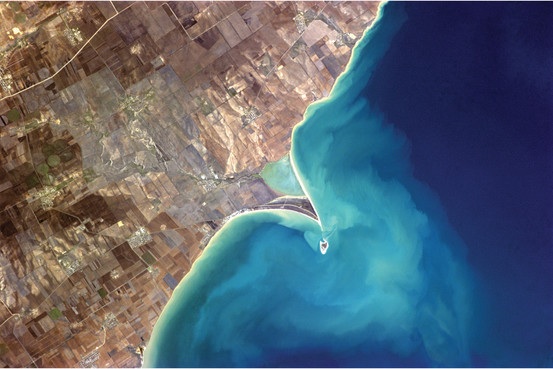
                                Slavne, Ukraine  NASA.

What is it really like to be in outer space? After fielding this question numerous times, astronaut Chris Hadfield decided to document his time on the international space station. The results can be found in his new book, "You Are Here: Around the World in 92 Minutes" (Little, Brown and Co., $26), which features about 150 of the approximately 45,000 photographs that he took mostly during his last trip, a five-month stay ending in May 2013. 

Mr. Hadfield, now retired, estimates that he orbited Earth 2,593 times during his three trips to space. He had to take his shots quickly: The station might cross the U.S. in just 10 minutes. His photos capture many unusual views of our planet, from the spidery patterns formed by sand dunes in the Gobi Desert to the circuit-like design of oil and gas sites in Carlsbad, N.M. "It's such a rare vantage point," he says. "I got to know the world well." 

See slideshow at WSJ website.

Saturday, October 4, 2014

Candidate tip sheet

Checking the tip sheet. 


Endorsements: 

COLA LO (Citizens For Local Accountability)  
This week the Oregonian published our 2014 City Council Endorsements.

The article also provided explanatory information on COLA and background information regarding the endorsements.  


Board member Dave Berg was interviewed by Oregonian reporter Michael Bamesberger regarding COLA's activities, its perspective, and the COLA endorsement process. 

The article in the Oregonian can be viewed at:   COLA Endorses

In the 2014 election the COLA board has decided to endorse both Jackie Manz and Matt Keenen for City Council.  

Oregonian: Political group endorses Jackie Manz and Matt Keenen in Lake Oswego 
City Council election

The group posts full videos of its interviews on its Vimeo page. Candidate Joe Buck declined to be interviewed on camera, Berg said.

See the COLA LO blog (link above) for complete information on endorsements.   


LOCAL  (Lake Oswego Citizens Action League)

Five candidates are running for three open council seats in the November 4 election. LOCAL will be interviewing all the candidates individually as well as sponsoring a candidate forum on Sunday, October 12th. After the candidate forum, we will announce our endorsements based on LOCAL's five values:
  • Prioritizing local needs
  • Ensuring fiscal responsibility
  • Focusing on essential city services
  • Preserving local community character
  • Respecting all citizens and their rights
Mark your calendars: LOCAL Candidate Forum, Sunday, October 12th 3:00 to 5:00 pm, Lake Oswego High School Auditorium

Friday, October 3, 2014

Candidates rounding the corner


Catching up to the money

Who's ahead in the money game?  Who's ahead in the hearts and minds of the voters?  These are two different things, but if money equates to votes, then follow the money.
Note:  Numbers are approximate and have been rounded for convenience.
See ORESTAR for current, detailed financial status of all candidates.
Endorsements are the next hurdle for this race

Ed Brockman 
So far Ed has reported only about $300 of his own money going into the campaign.  What will new reports show?
No new filings since last post.

Joe Buck
By far the best funded and biggest spender so far in the campaign.  From the looks of things, Joe has the backing of many of the old guard as evidenced by his campaign partners, marketing company and contributors, some of which have been connected with other organizations tied to downtown development, the streetcar, and the Chamber of Commerce.

Expenditures to date:  $8,666
Main expense: Fish Marketing $7,760
Total number of contributions listed:  24
Number of contributions that are $100 or less:  17
Largest contributor: Joe Buck $3,500
Other contributors over $100:
Mike Buck     $1,000
Bill Korach     $500
Rachel Korach     $500
Eugene Wizer     $300
Friends of Greg Macpherson     $250
Lt. Douglas Treat     $200
Robert Wagner     $150

Jeff Gudman
As an incumbent, Jeff has an advantage of name familiarity, a track record on the council and other committees, and is able to reuse many of his signs from his previous campaign.   So far, Jeff has mainly supported his own campaign.

Expenditures to date:  $4,414
Main expense:  Community Newspapers   $1,657
Total number of contributions:   5
Number of contributions $100 or less:  2
Largest contributor:  Jeff Gudman (3 contributions)  $3,000 total

Matt Keenan
It will be interesting to see Matt's campaign develop as time goes on.

Expenditures to date:   $3,400
Main expense:  Gerry Good  $1,200
Total number of contributors:   6
Number of contributions $100 or less:   2
Largest contributor:  Tim Keenen  $1,000
Other contributors over $100:
Pacific Spine Specialists (2 in-kind contributions)  $979
Gerry Good   $900
Tim Nay   $200

Jackie Manz
Has not contributed to own campaign so far; has 2 contributors from out of state.  This is shaping up to be a low-budget campaign.  It will be interesting to see where they all wind up when the election is over.
Expenditures to date:   $2,400
Main expense:  Sign Depot  $550
Total number of contributions:   7
Number of contributions $100 or less:   2
Largest contributor:   Debra T Larsson (out of state) $1,000
Other contributors over $100:
Donald Mattersdorff   $500
Deborah Alley   $500
Janet Cohen (out of state)   $250
Adrianne Brockman   $150


Thursday, October 2, 2014

Blogs of interest

Blogs and Websites of Interest:

Here are some excellent resources to learn about the science, economics, and social and political goals of the climate change movement.  Sustainability is being raised in just about every aspect of our lives in ways that the government, with help from activist groups (which are sometimes funded by the government itself), are telling us how and where we should live, work, shop and get around - and also how we can't.  It starts with discouraging automobile use, progresses to building denser communities, and moves to energy/carbon taxes and other dubious environmental regulations that have little to do with the "scientific" outcomes they promise.  It's about control, power and money.

The Sustainability cause is being used by a variety of interests that have gained power over the years and who have no signs of giving it up.  In the process, the public is losing personal rights and liberties faster than ever and is submitting to a form of tyranny paid for with their own dollars.  Learning more about what is happening and why is the first step in finding logical solutions to whatever real problems we have - and without losing our freedoms.  Education and action is what will save our towns, our government, and and our way of life.


The 50 to 1 Video Project   Interviews with leading thinkers and journalists on climate change

Joanne Nova.   (JoNova)  "Skeptical science for dissident thinkers"

Junk Science   "All the junk that's fit to debunk."

The Hockey Schtick  "if you can't explain the 'pause', you can't explain the cause."

Watts Up With That  "The world's most viewed site on global warming and climate change"

Cato At Liberty (see list of Topics for Energy and Environment)


Climate alarm profoundly immoral


Definition of "Climate Alarm" from:  

Reflections on Rapid Response to Unjustified Climate Alarm


Excerpt:
Climate alarm belongs to a class of issues characterized by a claim for which there is no evidence, that nonetheless appeals strongly to one or more interests or prejudices. Once the issue is adopted, evidence becomes irrelevant. Instead, the believer sees what he believes. Anything can serve as a supporting omen. Three very different previous examples come to mind (though there are many more examples that could be cited): Malthus’ theory of overpopulation, social Darwinism and the Dreyfus Affair. Although each of these issues engendered opposition, only the Dreyfus Affair led to widespread societal polarization. More commonly, only the ‘believers’ are sufficiently driven to form a movement. We will briefly review these examples (though each has been subject to book length analyses), but the issue of climate alarm is somewhat special in that it appeals to a sizeable number of interests, and has strong claims on the scientific community. It also has the potential to cause exceptional harm to an unprecedented number of people. This has led to persistent opposition amidst widespread lack of interest. However, all these issues are characterized by profound immorality pretending to virtue. 

Wednesday, October 1, 2014

Pacific Northwest atmospheric circulation

OCTOBER 1, 2014 8:55AM

New Research Erases Global Warming from Pacific Northwest


Poof, it was gone.
Just like that, the human fingerprints on a century-long warming trend in Northwestern United States were erased and replaced instead by the telltale signs of natural variability. 
That is the conclusion of new research published last week by a pair of scientists from the University of Washington. James Johnstone and Nathan Mantua published their paper titled “Atmospheric controls on northeast Pacific temperature variability and change 1900-2012” in the Proceeding of the National Academy of Sciences (PNAS).
Northeast Pacific coastal warming since 1900 is often ascribed to anthropogenic greenhouse forcing, whereas multidecadal temperature changes are widely interpreted in the framework of the Pacific Decadal Oscillation (PDO), which responds to regional atmospheric dynamics. This study uses several independent data sources to demonstrate that century-long warming around the northeast Pacific margins, like multidecadal variability, can be primarily attributed to changes in atmospheric circulation. It presents a significant reinterpretation of the region’s recent climate change origins, showing that atmospheric conditions have changed substantially over the last century, that these changes are not likely related to historical anthropogenic and natural radiative forcing, and that dynamical mechanisms of interannual and multidecadal temperature variability can also apply to observed century-long trends.
Translation: Natural variability in the atmosphere/ocean dynamics of the northern Pacific Ocean rather than human-caused global warming can largely explain the century-long rise in temperature in the Pacific Northwest.
And the authors have the figures to prove it.
The left-hand panel of Figure 1 (below) illustrates the observed trends over the period 19002012 for weather observing stations in the contiguous United States located west of longitude 116°W—this includes all of Washington and Oregon, most of California, and parts of Idaho and Nevada. Notice all the red, upward-pointing arrows indicating an overall temperature rise since 1900 across the entire region. The right-hand panel shows the trend in the same stations once the natural variability identified by Johnstone and Mantua has been removed.  If global warming were having an influence, it would be evident in both panels—more strongly so in the right-hand one.  Instead, in that panel, we have a mixed bag of up and down trends of very low magnitude—no strong signal of any kind, no sign of global warming.
Read more at CATO Institute 

In the meantime, we can only wonder what the authors of the recent U.S. National Climate Assessment (NCA) are thinking.  

After all, the NCA and the president are not particularly interested in what the science actually says about climate change and its causes and effects, but rather how it can be molded to support the climate change activism that will shape the legacy of the current administration. Inconvenient truths are too readily brushed aside.

A chilly trip to Chile

Fun diversion – How long until Antarctic ice touches South America?

SWEA Predictions


I am posting my predictions now, before the first Advisory Committee meeting tomorrow because I want to look back and see how close I came to the final plan.  Are these plans predictable from the start?   Or are the plans truly original and custom fit for each city and each area?   At least this time I will see the process from the start instead of hearing about it when the public open house occurs.

If anyone else would like to send me their predictions or guesses of what might result from the SWEA IGA, send them to upsuckercreek@gmail.com.  If you would like me to withhold your name from publication, just let me know.

Up Sucker Creek Prognostications:
Predictions for Southwest Employment Area Plan
October 1, 2014

The IGA is a Metro grant.  All regional governments contribute to the Construction Excise Tax fund, but jurisdictions need to apply to Metro to get any money back in the form of a grant.  All grants have strings attached.  My assumption is that Metro's goals will feature prominently in the end result.  LO can do what it wants and reject or change any plan that comes from this effort, but the pressure will be to cede to the advisory committee and staff and all the work that went into the plan, and to cooperate with our Metro "partner."   This is from the Staff report from the 01.21.2014  City Council Meeting regarding the IGA:


Metro’s Construction Excise Tax (CET) has provided local governments with planning grants to make land ready for development within the Urban Growth Boundary.


The purpose of the SW Employment Plan project is to enhance opportunities for redevelopment and high quality job creation in this underutilized area of the city. Metro’s CET grant program is voluntary; CET grants are matched with City funds and support local land use planning with the goal of making land ready for development and removing barriers to private investment. With the assistance of a consultant team, the City will work with property owners, existing businesses, neighborhood associations and other stakeholders to set specific project goals, and to identify land use, urban design, transportation, and public facility improvements needed to create a thriving district and to encourage private investment. The resulting plan will include any necessary development code amendments, along with shortand longterm improvement projects and financing strategies, consistent with the City’s Comprehensive Plan.
 Oops.  This isn't going to be that hard after all.  

The final draft will include: 

  1. A public "investment" scheme that involves both infrastructure changes and developer incentives.  I predict there will be a recommendation for a new (or expanded Lake Grove) Urban Renewal District and Metro TOD grants. A LID might be considered as part of a package if a URD does not bring in enough money right away.  
  2. The SWEA Plan will include multimodal connections including options for future BRT or light rail along Boones Ferry Rd. and the Kruse Way Employment Area.  For the initial phase, we will only see connections to the SW Corridor transportation hub at Bridgeport - like increased bus service and enhanced ped/bike paths.  
  3. To enhance opportunities for redevelopment, the city will produce codes that will be both non-conforming to the IP base zone and only need ministerial approval - no pesky public review or DRC to get in the way, thus removing barriers to mixed use (now called private investment).  These "Clear and Objective Housing Standards" will be applied in all commercial zones where mixed use that includes dense, multi-story housing is encouraged.  
  4. Mixed-use buildings will form a large chunk of the land along Boones Ferry Rd. and within a block or two on either side.  Housing will most likely be designated an area off Boones Ferry Rd. Though there isn't much room, there will be an attempt to create a Transit Oriented Development that planners can tout as live/work/play (and shop?).
  5. There will be a parklet and maybe a community garden for the employees and new residents (apartment renters), with bike paths and sidewalks throughout the area.  New pathways will connect the area to the city along BFR, Jean Rd., to Bridgeport, and all of the region.
  6. Successful (and good looking) light industrial buildings will remain, especially if they have good jobs, like Micro Tech. 
  7. The city's operations facility will be rebuilt - maybe on new land (this part is harder to guess) - and it will be done with TIF money generated from the URD.  (Bonds are so passé.)
  8. Unlike general obligation bonds, URD money can be spent any way the council wants, so there will be incentives for developers and infrastructure to set the stage.  Do I see a sports facility there?  Could be, but that isn't entering the plan just yet - maybe as unspecified park or public area.
  9. Parking will be at a premium.  Codes are already being considered  (but may be curtailed) that assume buildings next to bus stops (and maybe BRT or rail?) don't need many parking spots.  Plus, clients will be expected come from the densly-built mixed-use housing and offices in the area.  Parking standards will be unbundled from specific land uses.  (Imagine Lake Grove Zupan's parking lot on steroids.)
  10. Everything will look pretty on paper.  All the drawings will have acceptable buildings showing the same "vibrant" street scene with people eating at sidewalk cafés and leafy trees lining the sidewalk.  BFR will be a boulevard with a landscaped median between the RR tracks
  11. There will be no insistence that developers pay their own way or develop infrastructure.  The way things used to be done is history.  Now city planners call the shots on land use whether or not the market wants the product.  By using public dollars to cushion the risk, developers will be more inclined to do what the city wants.  
  12. The area will cater to new office/commercial/ development with residential above, while some warehouses will remain during the years-long transition.  More local/residential services will be located in the Neighborhood Village.  
  13. Tying it all together will be consistently-themed street lighting, accessories and furniture.   

Zoning, new codes, a land use plan, infrastructure, financial incentives....Metro's plans for strategic investment partners!  
Maybe I can find pictures and do maps to further test my skills, but this is enough for today.  Just remember - the area is a NOT blighted.  If nothing spectacular is happening in the IP zone, it is because: it is not financially viable, landowners like it the way it is, or they may be waiting for the mother lode of the public trough.  

SW Employment Area (SWEA) on Thursday 10/2

This is a heads up that the SWEA (pronounced like wheee!) Stakeholders Advisory Committee (pronounced SAC - duh) is holding its first meeting tomorrow.  The SWEA SAC (it's almost fun to say) meetings are open to the public, and like other land use plan meetings (think Foothills, the TSP, or the Comp Plan), there will be opportunities for citizen comment.  

Meetings are listed on the City Meetings Calendar on the City website, and some materials will be posted under the SWEA planning project page (Case # PIP 13-002)

Thursday, October 2
Lakeridge Jr. High School Library
(Formerly Waluga Jr. High)
 4700 Jean Rd. 
4:30 pm - 6:30 pm

There are only about 4 SWEA AC planning meetings before the final draft is produced along with Open Houses for the general public.  

It would be helpful for the public to get a thorough, unfiltered background view of the project.  I would like to see ALL of the project materials posted on the project website where the public can access them easily.  Key documents can be labeled as such.  
Here are some important documents that are NOT on the project web page:

These ARE on the project or meeting website: 

* See No. 5:  Why is there a need to execute a buildable plan in such a hurry?  Is there something happening I don't know about?  Is this Detroit?  Perhaps a developer is waiting for accompanying code changes, public infrastructure, public financing or incentives to take effect, or maybe Metro has a multimodal, TOD plan for the area. The rush just seems odd. 

Who are "stakeholders?" Generally the city creates a list of people who own property within or next to the plan area along with someone from the planning commission and city council if they so choose.  In this case, the Commission for Citizen Involvement requested citizens at large be included to represent the rest of us. So if you want more input or feedback, these are your go-to people for representation.  All meetings will be facilitated by a consultant team.  

Skip O'Neil - City Council
Ed Brockman - Planning Commission
Brent Bianchina - Rosewood NA
Lisa Volpel - Rosewood NA
Rebecca Crew - LO Chamber of Commerce
Lynn Barra - Owner Paradigm Froodworks, property owner
Mike Duyn - Commercial Real Estate Broker
Sean McNamara - Commercial Real Estate Broker
Scott Stoddard - Micro Systems Engineering Inc. - Employer
Terry Keyes - At Large
Ann Mestrovich - At Large
Joseph Taylor - At Large
Jennifer Sachmeier - Alternate

USC NOTE:  A larger discussion about how other CACs, SACs and ACs are formed and what they do will be for another day.  If you are like me, it has always remained a mystery to me who these committee people were and how they were selected.  I only found out about them after the fact which was (and continues to be) not very helpful to me or anyone else.  The very strange practice of having consultants manage citizen committees and public meetings will also be discussed.  All cities do this these days ($$$), and you have to wonder why.  But it at least explains why the public feels "managed" during these land use plan processes - it's because they are.